At a glance
- Address
- 510 Central Avenue, Hot Springs
- Adult admission
- $17 when checked
- Scope
- Hot Springs from the 1920s through 1940s
- Checked
- July 16, 2026
What story the museum tells
The Gangster Museum of America is a small downtown museum about the period when Hot Springs, Arkansas, became known for illegal gambling, nightlife, and visits by nationally famous crime figures. Its stated focus is local: how a resort city’s thermal baths, hotels, clubs, political arrangements, and reputation intersected with the underworld during the 1920s through the 1940s.
That local frame is the reason to visit. Hot Springs should not be treated as a smaller Las Vegas or Chicago. Its story involves a different civic economy and a long tension between public respectability, tolerated vice, law enforcement, and tourism.
Hours, admission, and location
The museum’s official visitor page lists 510 Central Avenue, within the walkable downtown corridor. When checked July 16, 2026, adult admission was $17, admission for ages 8–12 was $6, seniors 60 and older were $15, and children 8 and younger were free.
Published hours were seasonal. From March through September, the museum listed 10 a.m.–6 p.m. Sunday through Thursday and 10 a.m.–7 p.m. Friday and Saturday. From October through February, closing moved to 5 p.m. Sunday through Thursday and 6 p.m. Friday and Saturday. It listed closures for Thanksgiving, Christmas, and New Year’s Day.
What to expect inside
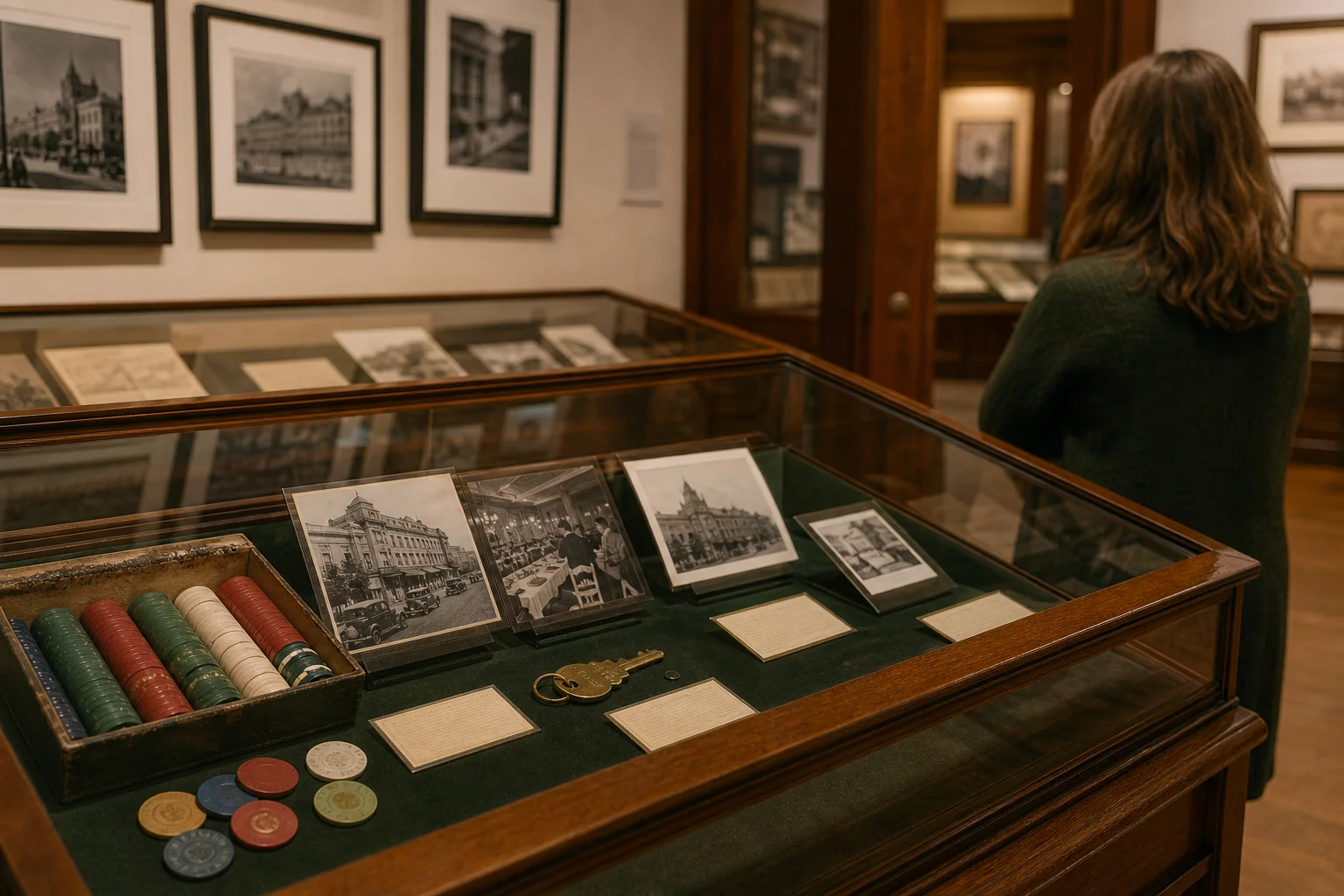
The attraction uses galleries, objects, photographs, and narrated local stories. Arkansas’s official tourism listing describes material about Hot Springs’ 1920s–1940s underworld and a gallery on the city’s connection to baseball. That combination reflects the broader resort culture: spring training, gambling, bathing, and celebrity travel occupied some of the same streets.
Allow enough time to read labels rather than treating the stop as a collection of outlaw names. A small museum can be covered quickly, but the difference between a souvenir stop and a useful history visit is attention to dates, artifact labels, and where an account came from.
History, objects, and local legend
Museums interpret. A display can contain an authentic period object while the surrounding story depends on later testimony. Read the object label closely: does it say “owned by,” “used by,” “associated with,” or simply “from the era”? Those phrases do different evidentiary work.
Hot Springs also has a large body of local legend. Some stories are supported by photographs, court records, business directories, or contemporary reporting. Others survive through repetition. A museum can responsibly preserve both if it labels which is which. Visitors should resist upgrading a colorful anecdote merely because it appears beside a real photograph.
Planning the stop
The Central Avenue location makes the museum easy to combine with Bathhouse Row and other downtown sites. Check parking and walking conditions separately, especially in summer heat. Families should decide whether children are ready for discussions of gambling, corruption, and violence; “gangster” branding does not make every subject light entertainment.
Visitors with mobility, hearing, or sensory needs should contact the museum directly for current access details. A listing can confirm an address and price but cannot answer every question about a particular visit.
For additional destination context, the Arkansas tourism listing provides a concise description. Use the museum’s own page for operational details and broader histories for contested claims.
Hot Springs connections to look for
The Gangster Museum of America works best as a Hot Springs history stop. Central Avenue, Bathhouse Row, resort hotels, gambling rooms, baseball training, and the surrounding national park landscape explain why visitors came to the city. Names such as Al Capone, Lucky Luciano, Frank Costello, and Owney Madden may attract attention, but the exhibit label should still tell you what connects a particular person to Hot Springs.
When you visit the museum, compare three kinds of material: an object with documented provenance, a photograph or newspaper image that establishes a public event, and a narrated story preserved in local memory. All can belong in a museum. They do not carry equal evidentiary weight. The distinction is especially important when an exhibit uses the word “gangster” as a broad period label.
How long to allow
A visitor focused on the main galleries can make a compact stop. Someone reading labels, checking the baseball connections, and walking nearby Central Avenue should allow more time. Confirm guided tour availability directly; do not assume the admission ticket includes a scheduled tour or special program.
Gangster Museum of America: a quick visitor answer
The Gangster Museum of America is a compact Hot Springs, Arkansas, museum focused on the city’s gambling, nightlife, baseball, and organized-crime associations. Visitors should expect a guided or interpreted local-history experience rather than a large national museum. Its Central Avenue location makes it easy to pair with Bathhouse Row, but current museum hours, admission prices, tour timing, and accessibility should be confirmed before arrival.
Use the exhibits as a starting point for Hot Springs history. A photograph, artifact, or guide story can establish different things, and a colorful connection to Al Capone or another famous visitor still needs a date and provenance. The strongest visit combines the museum’s local objects with public archives, contemporary newspapers, and the broader civic story of tolerated gambling and tourism.
Gangster Museum visitor questions
Where is the Gangster Museum of America?
It is at 510 Central Avenue in downtown Hot Springs, Arkansas.
How much is admission?
The official page listed adult admission at $17 when checked July 16, 2026, with separate child and senior rates.
Is it only about Al Capone?
No. Its stated scope covers Hot Springs gambling and crime history, other visiting figures, and a baseball gallery.