At a glance
- Public tour
- Saturday departures when checked
- Typical length
- At least 90 minutes
- Listed price
- $35 when checked
- Pickup
- Union Station
The current public tour
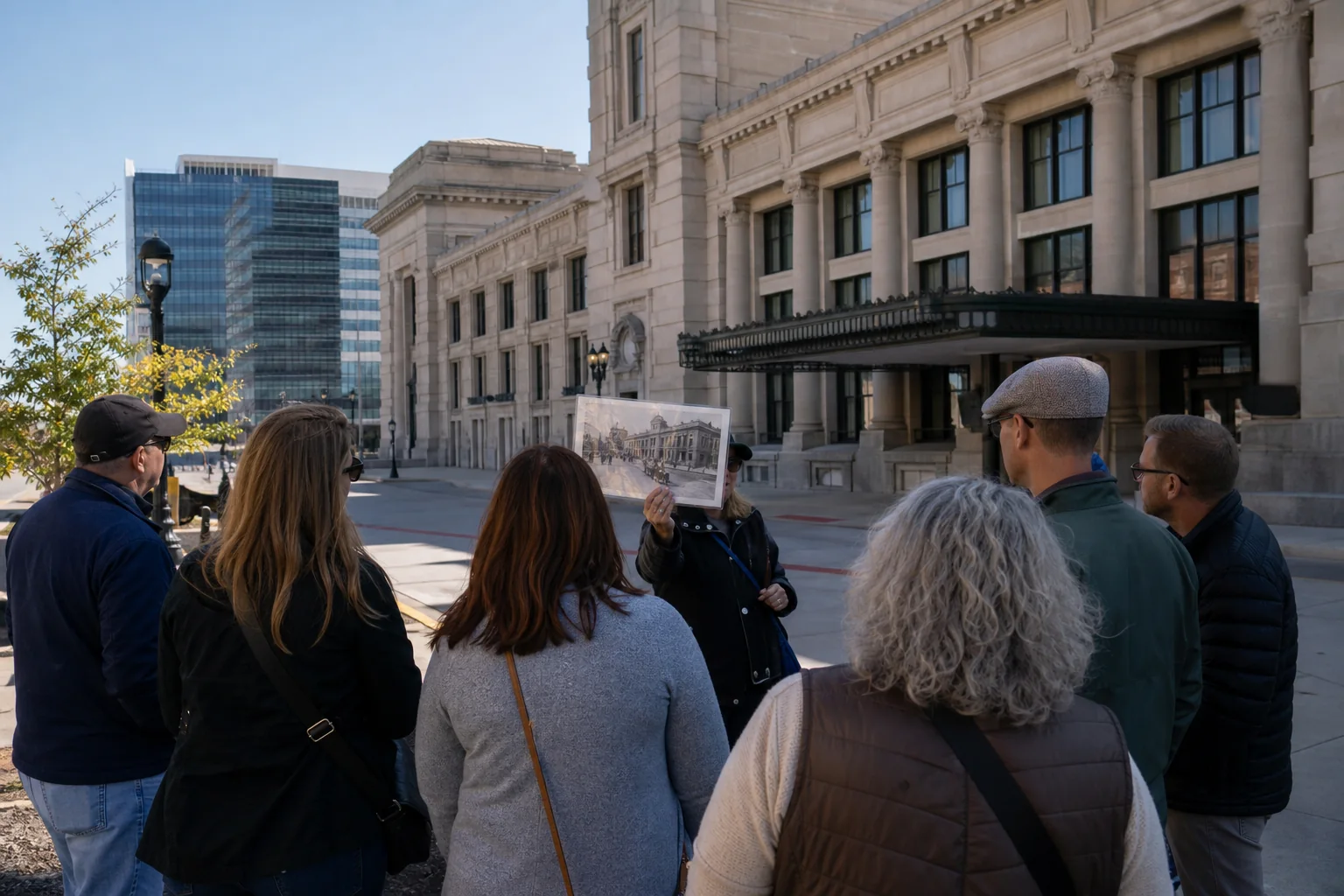
Visit KC’s official listing describes a guided Gangster Tour with Saturday departures, pickup and return at Union Station, a running time of at least 90 minutes, and a listed price of $35 when checked July 16, 2026. Private group arrangements were also described. Schedules and prices can change, so confirm them on the current tourism listing before building a day around the tour.
The advertised frame is the Pendergast era, with former speakeasy, gambling, and crime locations presented through narration and historical media. That is a strong starting structure if the guide identifies which photographs, reports, and records support each stop.
The Pendergast-era context
“Gangster tour” is a narrow name for a wider system. Kansas City’s 1920s and 1930s history involves the political organization associated with Tom Pendergast, municipal contracts, vice, elections, nightlife, jazz, law enforcement, and federal prosecution. Crime figures operated inside that civic environment rather than in a separate costume drama.
Visit KC’s history overview dates the Pendergast era broadly from 1920 to 1945. A tour can use that period label, but it should still attach individual stories to a specific year and record.
What a useful route should cover
Union Station matters for more than convenient pickup. The 1933 Union Station shooting became a major national crime story and an important event in federal law-enforcement history. A responsible explanation distinguishes what witnesses observed, what agencies concluded, and which later claims remain disputed.
A strong route should also connect downtown hotels, clubs, political offices, neighborhoods, and the movement of money. If every stop is only a murder site, the visitor misses how tolerated vice and political protection worked day after day.
Ask whether the tour exits the vehicle, whether buildings are entered, and how much of the route depends on views through a bus window. Traffic and construction can change the order or remove a stop.
Museums and self-guided alternatives
Travelers who prefer objects and labels to performance can combine Union Station history with local museums, library collections, and architectural walking. An archive or museum may provide slower access to photographs and context, while a guided route makes distance and neighborhood change easier to understand.
A self-guided search needs restraint. Many historic locations are private property or ordinary businesses. An old address may have been renumbered or demolished. Confirm the location with a map and building record, remain on public space, and do not treat present residents as part of the attraction.
Questions to ask before booking
- Is the listed price inclusive of fees?
- What vehicle is used, and can it accommodate mobility equipment?
- Are there restroom or walking stops?
- What happens in severe weather or if attendance is low?
- Are historical images dated and sourced?
- Does the narration distinguish allegation, charge, conviction, and folklore?
One Wal does not rank operators by customer experience or accept ticket commissions. The right choice depends on access needs, schedule, and the kind of interpretation you want.
Union Station, Frank Nash, and a careful tour narrative
A Kansas City gangster tour often uses Union Station as both its meeting place and its most recognizable crime-history reference. The 1933 Union Station shooting followed the transfer of federal prisoner Frank Nash and killed law-enforcement officers as well as Nash. Agencies and later writers have disputed parts of the planning and responsibility. A guide should identify the version being told instead of presenting every later detail as settled.
The KC gangster tour also needs to explain why Kansas City, Missouri, supported a large nightlife and vice economy. The Pendergast political organization, municipal government, jazz districts, gambling, liquor, contracts, and federal enforcement belong in the same account. Reducing that history to a tour bus list of mobsters loses the system that made the sites significant.
Public tour or private group?
The scheduled public city tour is the straightforward option for individuals. A private tour may suit a school, conference, or family group that needs a different departure time or accessibility plan. Ask whether private groups still meet at Union Station Kansas City, what vehicle is used, and whether the operator can adapt mature material for younger visitors.
Because traffic and events can affect downtown Kansas City, treat route descriptions as representative. Confirm seats, price, departure, and the return location with the operator rather than relying on an older travel article.
Kansas City gangster tour: a quick visitor answer
The Kansas City Gangster Tour is a guided vehicle experience associated with Union Station and Pendergast-era crime history. Before booking, confirm the current departure date, ticket price, meeting point, duration, vehicle access, and whether the route includes stops outside the bus. A tourism listing is useful for logistics, but it does not independently verify every story in a guide’s narration.
The strongest KC gangster tour connects the 1933 Union Station shooting to the broader political, nightlife, gambling, jazz, and law-enforcement history of Kansas City, Missouri. It distinguishes the documented transfer of Frank Nash and the public deaths from disputed claims about planning and responsibility. Visitors should leave with a chronology and sources, not just a roster of mobsters and former speakeasies.
Kansas City gangster tour questions
Where does the Kansas City Gangster Tour depart?
Visit KC listed pickup and drop-off at Union Station when checked July 16, 2026.
How long is the tour?
The official tourism listing described it as at least 90 minutes.
Does One Wal earn a booking commission?
No. This guide has no affiliate or ticket relationship.